
 Русский
Broken Dreams: Mount Brocken and Walpurgis Night HARZlich willkommen to the highest peak of Germany's Harz Mountains.

You don't have to be a Goethe scholar to know Mount Brocken. Even if you've never opened Faust—whose most iconic Walpurgis Night scenes unfold on this very mountain—you've almost certainly heard of the legendary night when witches gather to celebrate. Every year, on the night of April 30, folklore says they descend upon Brocken for the greatest witches' sabbath on Earth.
Curious to experience the mountain before the crowds and festivities arrived, we headed to Brocken on the eve of Walpurgis Night and spent several unforgettable hours exploring one of Germany's most mysterious landscapes.
Part 1. Schierke
Reaching Mount Brocken is part of the adventure. There are only two ways to the summit: hike from the village of Schierke, following in the footsteps of Doctor Faust, or board the historic steam railway that has been climbing the mountain for more than a century.

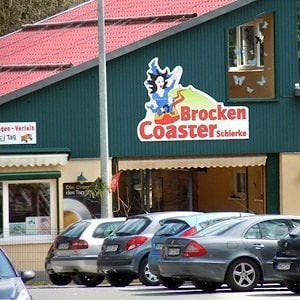
Long before you arrive in Schierke, the village leaves no doubt about its identity. Witches appear everywhere—and, judging by appearances, the most glamorous one in the Harz seems to be waiting right at the entrance.
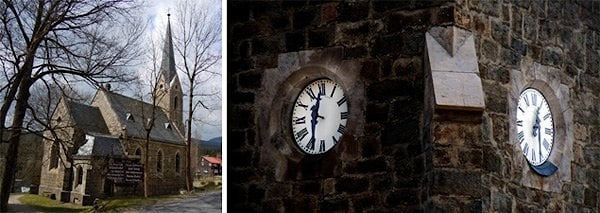
Even outside the village church, the signpost points the way to Mount Brocken, as if faith and folklore have long learned to coexist here.
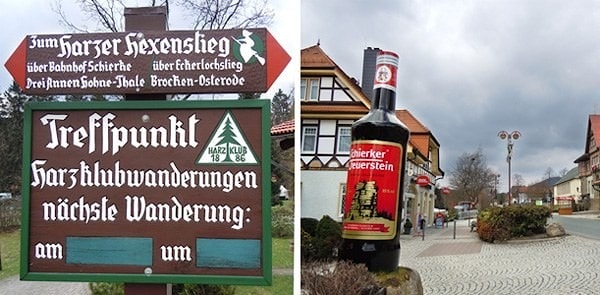
As Walpurgis Night approaches, Schierke embraces its reputation with enthusiasm. The silhouette of a witch on a broomstick appears at every turn, while bottles of the local herbal liqueur, Schierker Feuerstein, proudly occupy shop windows and souvenir stands.


The "dark forces" don't stop there. Carved figures of demons and witches decorate house façades throughout the village...
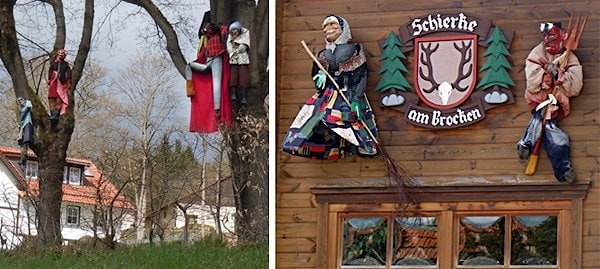
...while even the surrounding trees seem to have fallen under their spell. Schierke's coat of arms—a stag's skull crowned with magnificent antlers—is watched over by a pair of sinister companions.

Step off the road leading to the railway station and wander into the shadowy forest, and you'll stumble upon something even stranger: ancient symbols carved into enormous boulders, hidden among the trees like forgotten relics from another age.
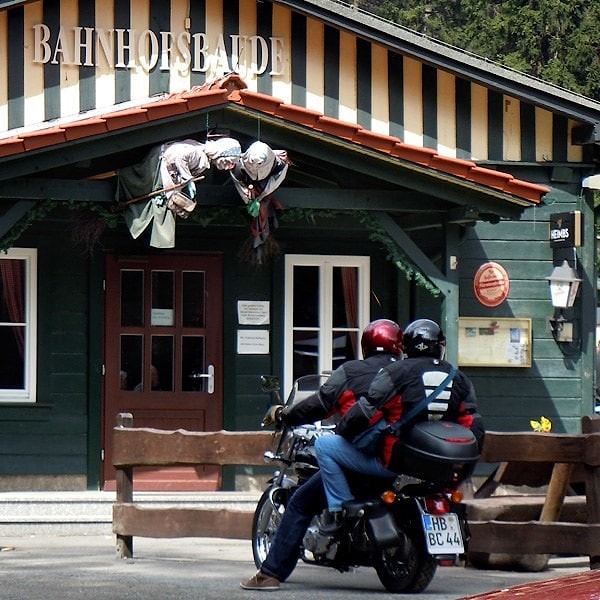
Back at Schierke station, fantasy meets reality. Parked side by side are two perfectly acceptable ways for a witch to travel: a broomstick... and a motorcycle.
Part 2. The Witches' Railway
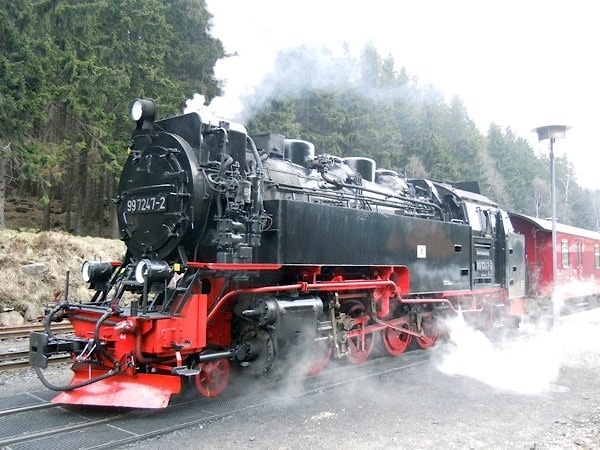
With the summit calling, we climb aboard the mountain railway. Our tiny train is hauled by a beautifully preserved steam locomotive whose age only adds to its charm.

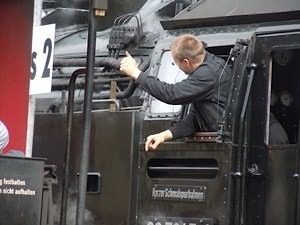
At every station along the route—including those on the line to the picturesque town of Wernigerode, famous as a filming location for That Very Same Münchhausen—the engineer performs a meticulous inspection of the locomotive before giving the conductor the signal to depart.
 "
"
Then, with a deep breath of steam and a chorus of whistles, the train begins its slow ascent. It circles the mountain in broad curves, climbing steadily higher through the Harz landscape.
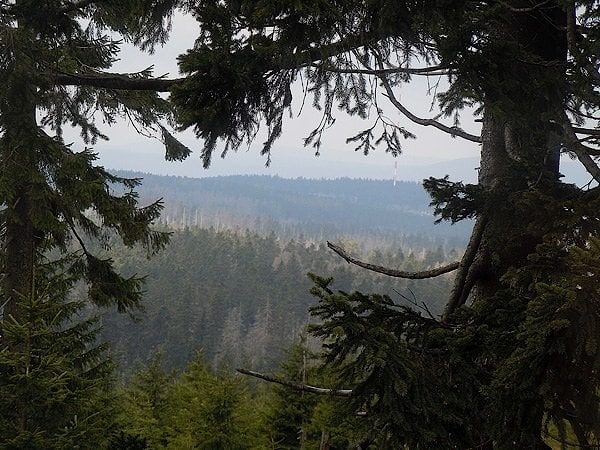
The first stretch winds through dense spruce forest...
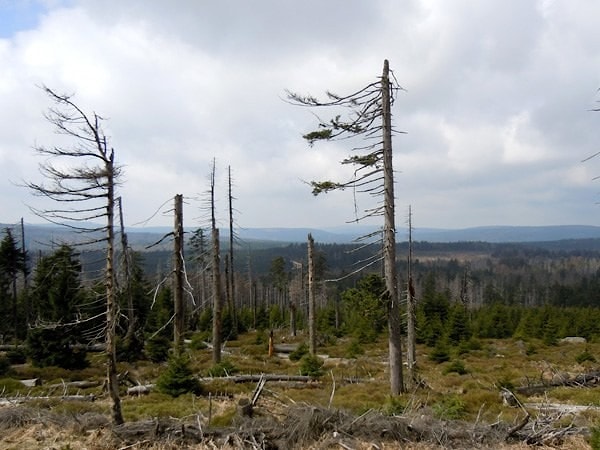
...but gradually the scenery changes. The healthy woodland gives way to haunting forests of dead trees, their pale trunks standing like silent sentinels. The few branches that remain all seem to lean away from the summit, twisted by relentless winds and the mountain's unforgiving climate—as though even the forest itself wishes to keep its distance from Brocken and its legendary reputation.
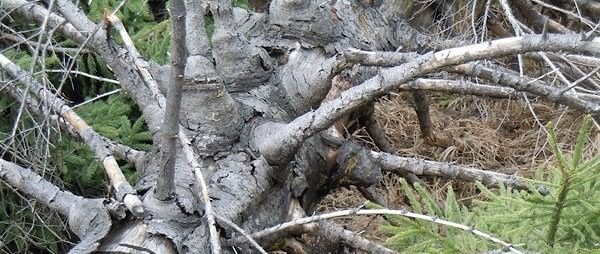
And yet there is something undeniably beautiful about this stark landscape. Bleached by wind and weather, the skeletal forest possesses a quiet, almost otherworldly elegance.

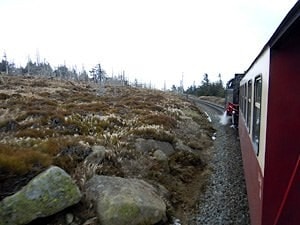
Higher still, even the trees disappear. The mountain opens into a world of granite boulders draped in pale yellow lichens, creating a landscape that feels less like central Germany and more like the surface of another planet.
Part 3. Broken Dreams
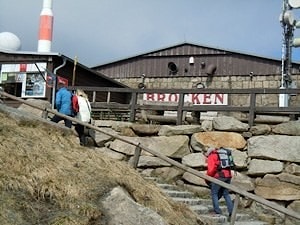
A few minutes later, the little steam train reaches the end of the line. The tracks stop abruptly against a granite boulder, and beyond them lies the summit of Mount Brocken. Passengers stretch their legs, step onto the platform, and instinctively begin the short climb toward the highest point of the Harz.
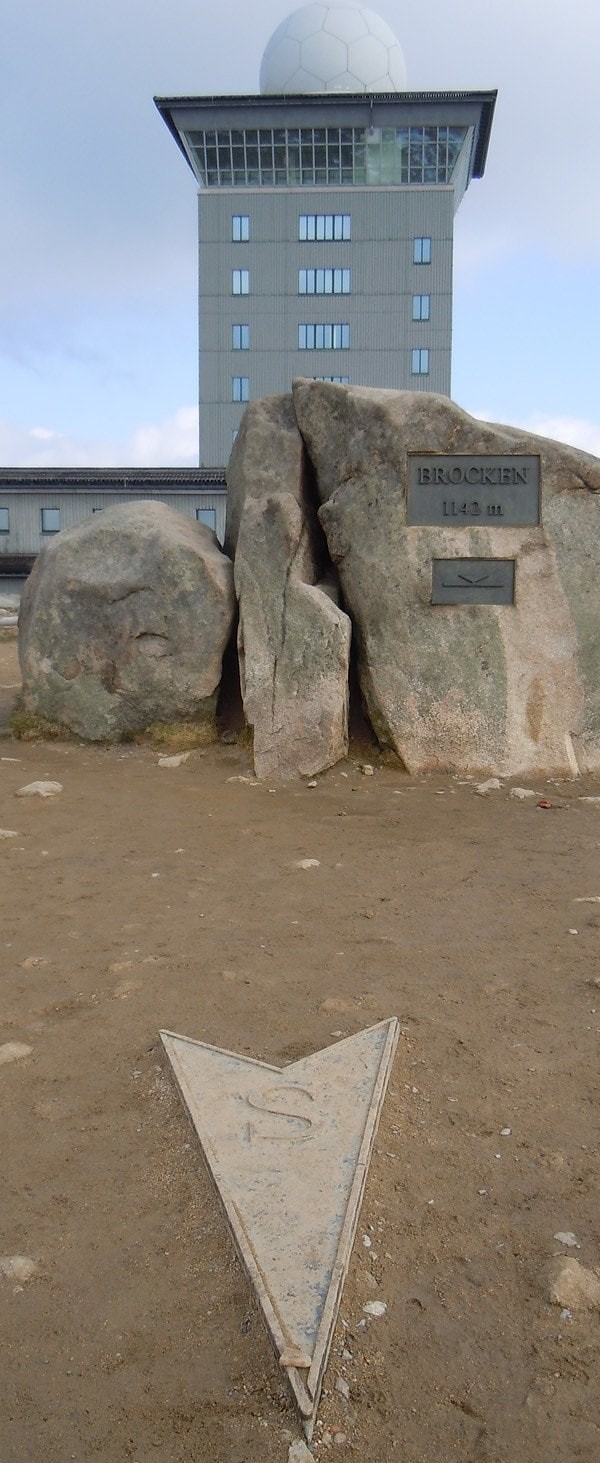
The mountaintop itself is unexpectedly bare—as smooth and treeless as the knee of some long-forgotten stone giant. Only scattered granite boulders remain, some marked with bronze plaques, alongside the austere grey buildings that once belonged to the East German secret police, the Stasi.
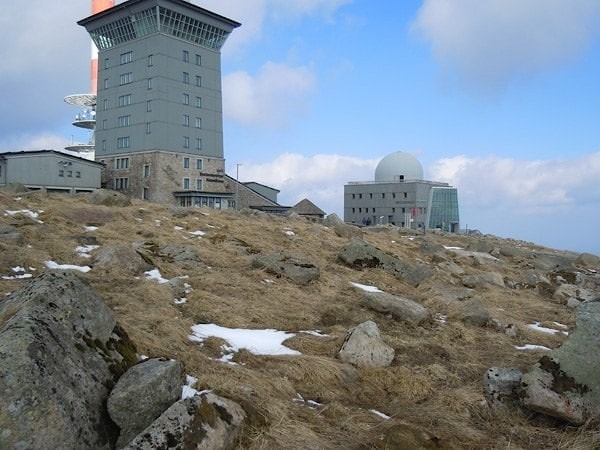
What the guardians of the Iron Curtain made of Brocken's centuries-old reputation as the Witches' Mountain is anyone's guess. What is certain is that they understood geography. At 1,141 metres (3,744 feet), Brocken commands the highest point in the Harz, making it the perfect location for radar stations that once kept a watchful eye over West Germany.
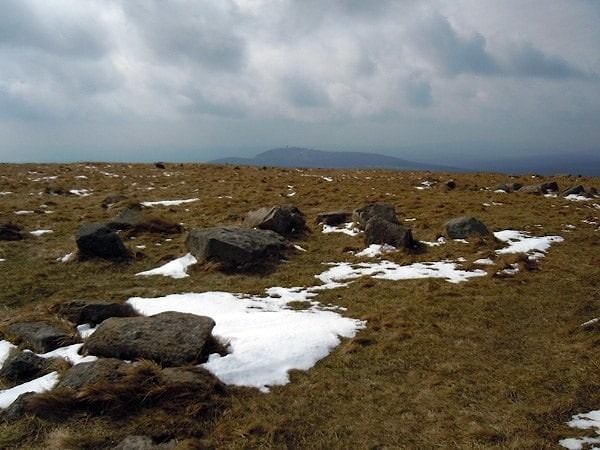
The mountain is hardly known for its hospitality. The average annual temperature struggles to climb above 3°C (37°F). Snow often lingers on the summit for nearly half the year, while dense fog wraps the peak for around 300 days annually. Add a relentless wind that never seems to rest, and it's easy to understand why Brocken has inspired so many legends.
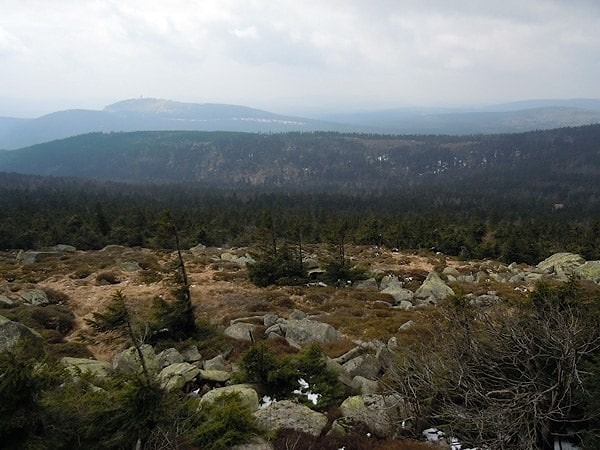
Yet on April 30, 2013, the mountain granted us an unexpected gift: brilliant sunshine.
For a brief moment, the famous summit revealed itself in full. There was, in truth, very little to see—just endless granite, scattered rocks and patches of yellow lichen clinging stubbornly to the stone.

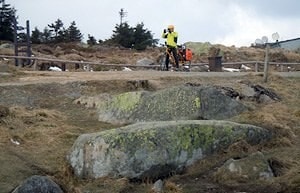
The wind, however, more than lived up to its reputation. It sliced effortlessly through even the warm jacket we had wisely packed, reminding us that Brocken never lets visitors forget where they are.
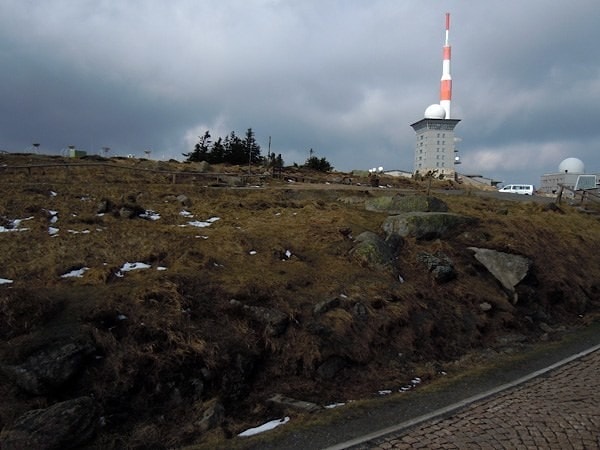
Before long, the mountain reclaimed its familiar mood. The sunlight faded almost as suddenly as it had appeared. Whether it was the approaching evening or another wall of heavy mist rolling across the summit hardly mattered. Darkness settled quickly.
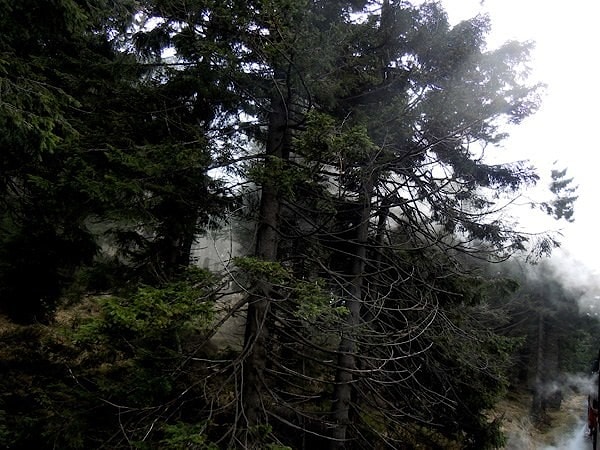
The prospect of hiking back down an unlit forest trail through wind and fog suddenly seemed far less romantic than it had that morning. So when the familiar black-and-red steam locomotive finally emerged from the gloom, it felt less like public transport and more like a rescue mission.
The journey downhill unfolded like the mountain in reverse. First came the barren granite plateau. Then the ghostly forest of skeletal trees, their claw-like branches reaching through drifting ribbons of mist. Lower still, life slowly returned: patches of green appeared between the rocks, the trees grew taller, and before long we were once again surrounded by the deep, dark forest that now felt almost welcoming.

Epilogue
Sensibly choosing not to spend the night on the mountain, the people of the villages surrounding Brocken celebrated Walpurgis Night in their own way.
The streets filled with witches' hats, masks, medieval costumes and cheerful crowds. Beer flowed freely, schnapps warmed against the evening chill, and stalls served delicious waffles piled high with every imaginable filling. The highlight of the night was the annual open-air performance of Faust, staged against the dramatic backdrop of carefully prepared pagan bonfires—because even ancient witchcraft, it seems, is organised with unmistakable German precision.
By the following morning, however, every town around Brocken seemed almost deserted.
Not because the women had flown off to a witches' sabbath after exhausting the menfolk with a final night of enchantment.
The explanation was far more practical.
It was May Day—a traditional public holiday across Germany.
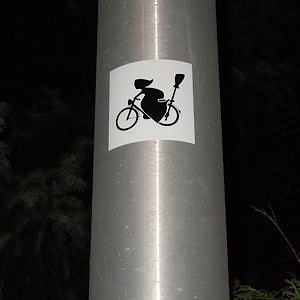
And yet, after leaving Brocken behind, one question remained.
What is it that draws so many people to this mountain?
Perhaps it isn't the summit itself. Once you're there, it's little more than rock, wind and sky.
Perhaps the real magic lies in the journey—the winding railway, the haunted forests, the shifting weather, the strange legends and unexpected discoveries that accompany every step toward the naked peak.
And, if you're lucky...
...on the way back down as well.
— The End —

Other posters on Germany



The site is powered by Nestorclub.com
Copyright © 2009-2026 Cats & Dreams. All rights reserved.