
 Русский
A Journey to Venaria Reale The fairytale reality of the Italian town of Venaria Reale and the magic of its royal palace, gardens, museums and hidden corners

A promising beginning
At last, the stars seemed to align, and my wife and I found ourselves heading back to Italy. This time we chose Piedmont — a part of the country we had somehow never managed to visit, despite having travelled through Italy in just about every direction imaginable.
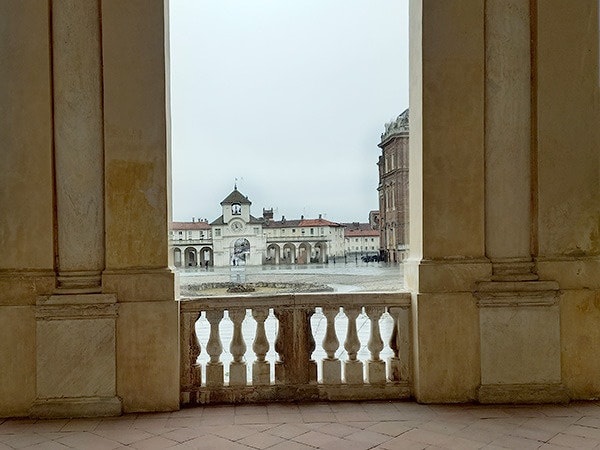
The capital of Piedmont, Turin, is one of northern Italy’s great cities. Before this trip, however, we knew it mostly for its industry, its passionate football culture and the century-and-a-half-long story of Lavazza coffee. A quick internet search for somewhere to stay produced an unexpected discovery. Just outside Turin lies the wonderfully named little town of Venaria Reale. The name alone had already won us over — and then we discovered something even better: an apartment with a view directly onto the main square of the royal palace.
There was really nothing left to debate. We booked it.
A little about the palace
The Royal Palace of Venaria Reale was built between 1658 and 1679 for Duke Charles Emmanuel II of Savoy as a hunting residence. And, incidentally, Venaria has nothing whatsoever to do with wine or spirits: the name comes from the Latin venatio, meaning "the hunt".
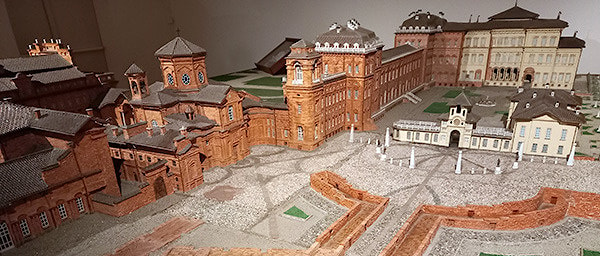
The palace grew into one of the most magnificent Baroque complexes in Italy: a vast royal residence surrounded by an enormous park, formal French gardens, fountains and cascades, stables, the Church of St Hubert and the Galleria di Diana.
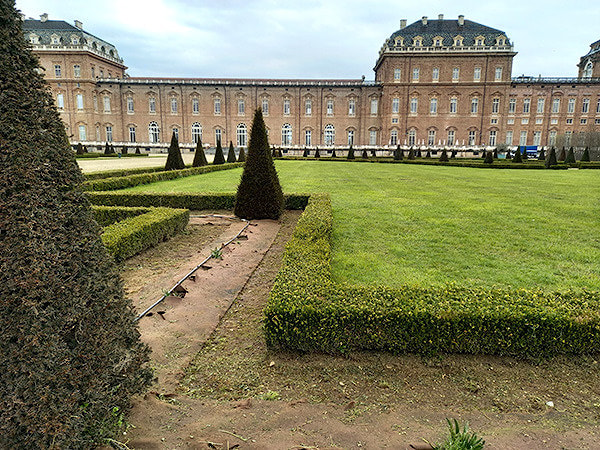
Then the monarchy disappeared, and with it much of the fascination surrounding royal residences. The palace gradually fell into neglect. Its splendour faded, and Venaria Reale itself slipped into the role of a remote, unfashionable suburb of Turin — the sort of place people lived in because they could not quite afford to live somewhere more prestigious.
Fortunately for travellers like us, that story did not have the last word.
Towards the end of the 20th century, Turin finally turned its attention to its forgotten royal neighbour and found the resources to bring the palace back to life. The enormous restoration project lasted from 1999 to 2007.
The result is extraordinary. More than a million people visited the palace last year alone, making Venaria Reale one of Italy’s most visited museum sites.
Arrival
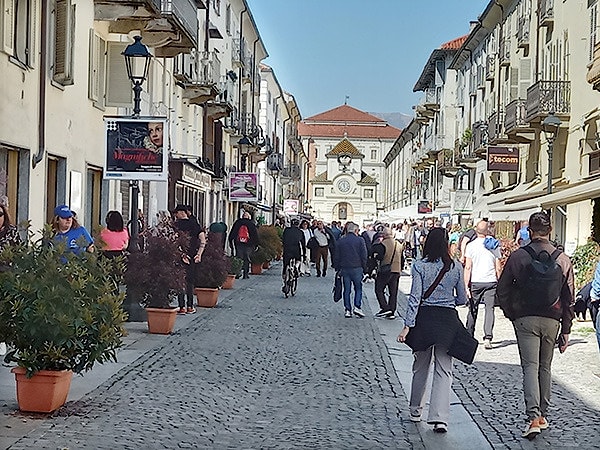
When we stepped off the train at Venaria Reale’s charming little station, we found ourselves at the beginning of a two-kilometre-long street leading straight towards the royal palace. It is part village high street, part leisurely tourist promenade, lined with cafés and shops and full of the gentle bustle that comes with having a palace at the end of the road.
On the way, the street opens suddenly onto an extraordinary space: Piazza dell’Annunziata. The square was deliberately designed as a kind of theatrical stage, creating a dramatic prelude to the grand view of the royal palace beyond. Its unusual shape is said to echo the medallion of the Order of the Annunciation, one of Europe’s oldest and most prestigious chivalric orders.
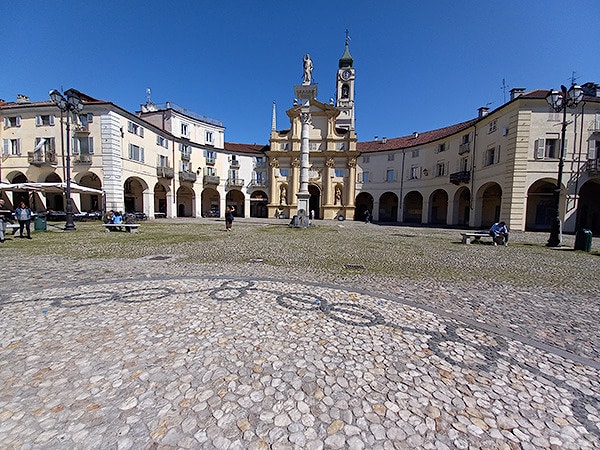
Two columns rise from the square, one crowned by a statue of the Archangel Gabriel, the other by the Virgin Mary. At the foot of Gabriel’s column, water still pours from an old fountain — an irresistible invitation to the locals on a hot summer day.
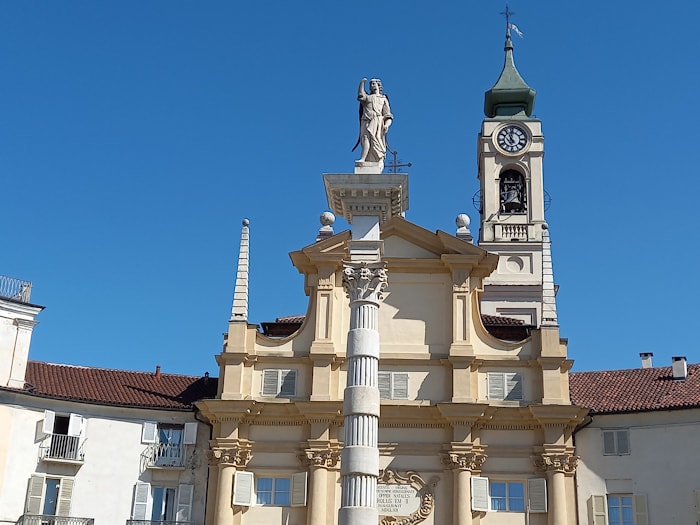
Behind the archangel stands the small and rather lovely Church of the Annunciation. The original plan called for an identical twin church at the opposite end of the square.
It was never completed.
All that remains is a single façade, designed as a mirror image of the church opposite. At some point, the unfinished structure acquired a rather less ecclesiastical neighbour: the local hospital was built behind it.
We had chosen to stay at Il Floretto, a delightful little property with the sort of Italian courtyard that makes you wonder whether you have accidentally walked onto a film set.
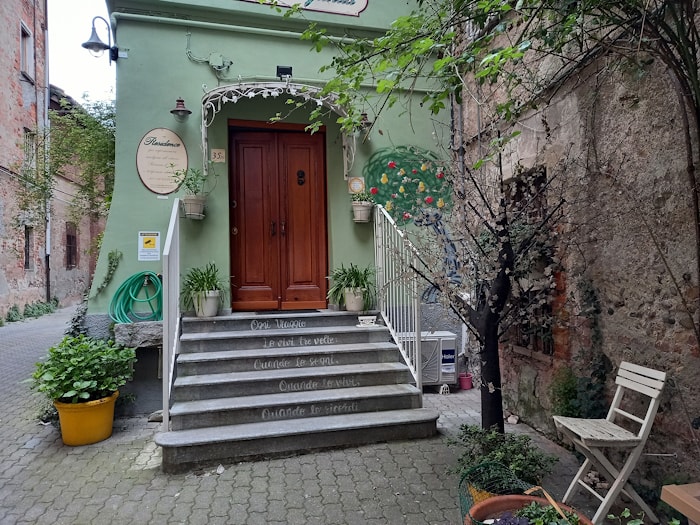
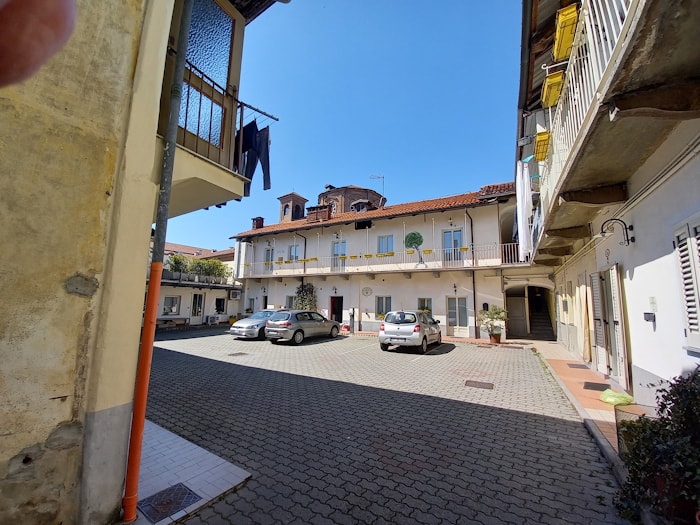
The two-storey building has an open gallery giving access to several apartments. Inside, everything feels like a set from a classic Italian film of the 1950s. This is the Italy one now mostly encounters in memory: a little too much ornament, a lot of faded elegance, decorations that suggest a garden in perpetual bloom, a full-length mirror in a wooden frame, oak cupboards that look as though they belong in a museum, paintings overflowing with extravagant bouquets, handsome stone floors and chandeliers.
And yet, hidden discreetly behind the furniture and period details, all the conveniences of the 21st century are there: a washing machine, a two-ring hob and a wonderful rain shower. Everything you need for a few comfortable days — without spoiling the illusion.
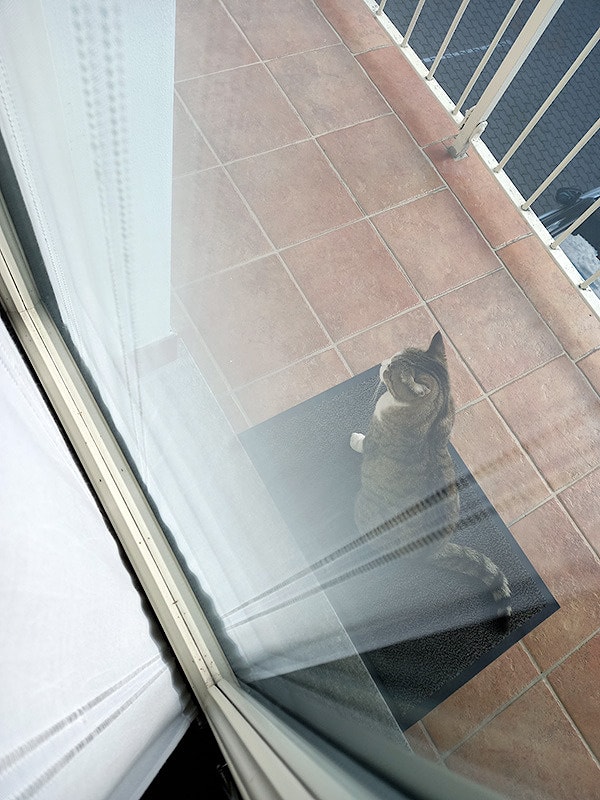
In the photograph above: the friendly cat who made the mat outside our door her permanent residence.
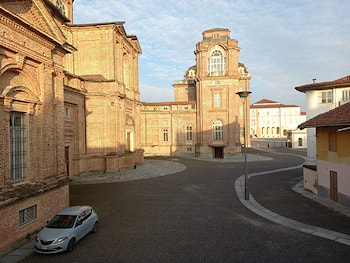
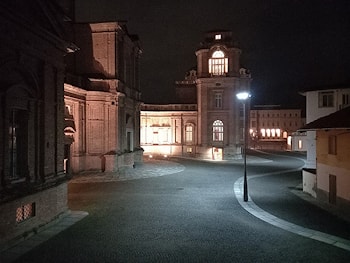
But the real showstopper was the view from our window.
It was magnificent at any hour, but especially at night. The palace square spread out below us like something from a fairytale film — the sort of view that makes you pause before drawing the curtains.


Breakfast was served at the neighbouring Osteria: the classic Italian morning ritual, beginning with the aroma of superb coffee and cakes that seemed to have emerged from the oven only moments earlier. There was apple cake, chocolate cake and something with jam — strawberry, I think.
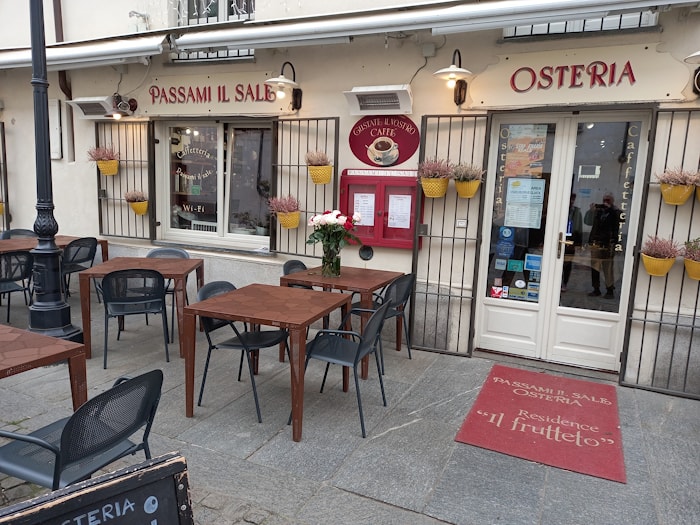
There were also the obligatory yoghurt and croissants and, unexpectedly, boiled eggs — a small reminder that this was northern Italy, not the Mediterranean south of one’s imagination.
Early in the morning, the café filled with palace museum employees, security guards and anyone else whose day had begun unusually early on the square. Behind the counter was Anna: loud, wonderfully quick, tanned and utterly Italian in the best possible sense.
She produced an apparently endless stream of coffee as if equipped with eight hands, while finding a few encouraging words for every customer. She seemed to know everyone — along with their families, their habits and, presumably, most of their stories.
In short, it was the perfect place to begin the day. And, conveniently, the ticket office for the royal palace museum was just across the street.
A royal ending — and a rather Italian one
There is one more thing worth knowing about the dynasty whose palace we had come to see.
The House of Savoy was the last royal dynasty to rule Italy. Its history stretches deep into the past and is filled with the sort of legends one expects from a European royal house. But its final chapter is considerably less romantic.
The last king, Victor Emmanuel III, supported Mussolini, while Mussolini himself had little respect for the monarch. In the end, the alliance damaged them both. By the close of the Second World War, with Mussolini and his regime defeated, the monarchy had become deeply unpopular as well.
The solution was remarkably Italian in its lack of theatrical violence. There was no execution of the royal family, no guillotine, no revolutionary spectacle. The king and his family were simply asked to leave Italy — and not to come back.
There is something almost characteristically Italian about the idea. To be told that you may never again see your own country, rather than being marched to a scaffold, might sound like a gentle punishment. But for a king, perhaps it was a devastating one.
History eventually softened even this prohibition. In the 21st century, the Italian Parliament finally allowed the heirs of the former royal family to return to Italy.
And there is another detail that makes the story rather more generous.
By the time the monarchy went into exile, the House of Savoy had donated a considerable part of its wealth to the Italian people. Its magnificent art collections were transferred to museums throughout the country, where they can still be seen today.
So, in a sense, the royal family left — but their treasures stayed.
And here in Venaria Reale, standing beneath the palace walls, it is easy to feel that the story of the Savoys is not really over at all. It has simply changed its setting: from royal courts and hunting parties to museums, gardens, cafés and the footsteps of travellers arriving from the little railway station down the road.
The Palace Draws Nearer
Every morning, we watched an extraordinary, seemingly endless queue form outside the ticket office next to our apartment.
It took us a little while to discover what had caused the sudden invasion. The day before we arrived, Turin’s newspapers and websites had launched a major campaign promoting visits to the Royal Palace of Venaria Reale — with one irresistible extra: the royal gardens were in bloom.
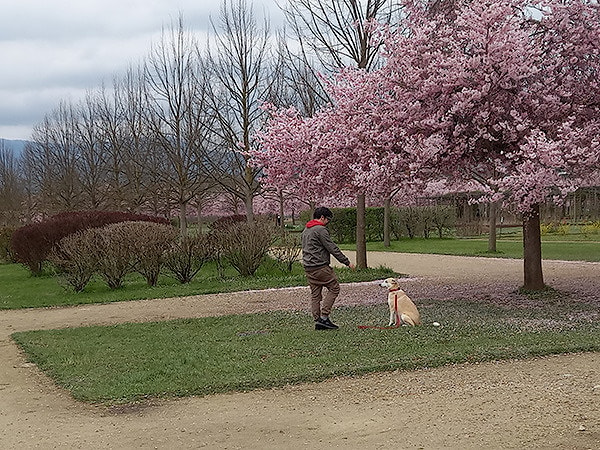
And what a bloom it was.
Precisely in time for our arrival, the palace gardens had burst into flower. Cherry trees, apple trees and several other fruit trees whose names we never quite established were all putting on their spring display.
Nature, however, is notoriously indifferent to tourist schedules. The blossom lasts barely a week, so Turin’s authorities had responded by extending the garden opening hours from early morning until sunset.
The result was predictable: a spectacular surge of visitors, with enormous queues forming at the ticket office from the moment it opened.
Now, as much as we love Italy, we had not travelled all this way to spend our holiday standing in line — only to exchange the queue for another one inside the museum, surrounded by hundreds of fellow visitors.
So we gradually resigned ourselves to the possibility that we would simply have to admire the royal palace and its gardens from the outside.
Then the benevolent spirits of travel intervened. One morning, they sent us an absolutely biblical downpour. We looked at the deserted ticket office, looked at each other, and breathed a collective mille grazie.
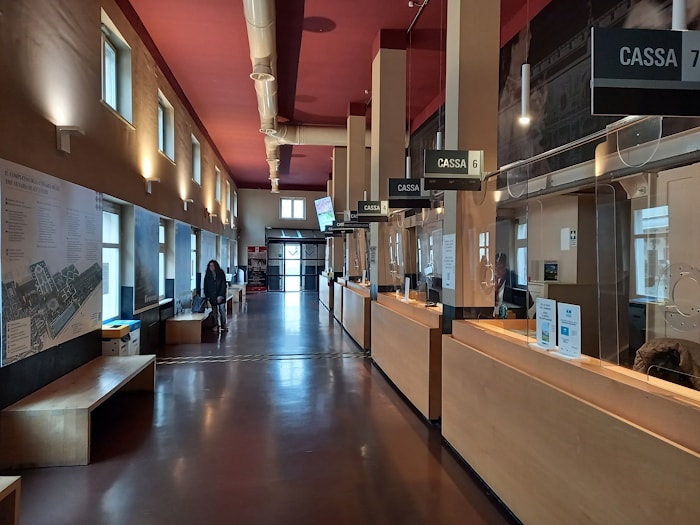
There was not a soul in sight. So, in the comfortable solitude created by the rain, we went inside to explore the royal palace.
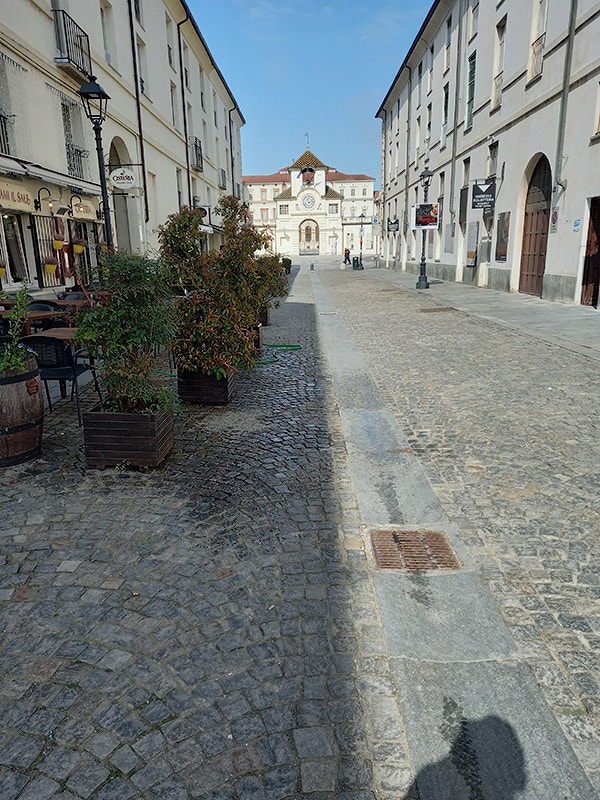
Five Very Happy Hours
The first thing to say is that the palace has been restored superbly.
The visit begins with a magnificent, seemingly endless gallery of portraits of the rulers of Piedmont, beginning with the very first Savoy duke — famous for his passion for hunting — and continuing through generations of remarkably elegant gentlemen with surprisingly handsome faces.
This last detail deserves mention. European royal dynasties have not always been blessed with photogenic features; in some royal portrait galleries, the faces staring down from the walls can be frankly alarming. Here, however, the Savoys seem to have been unusually fortunate.
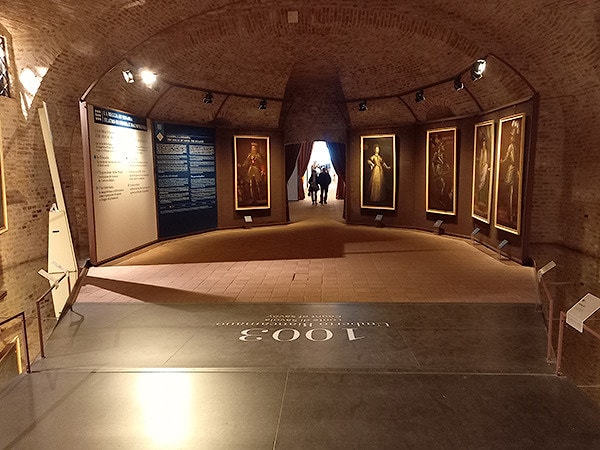
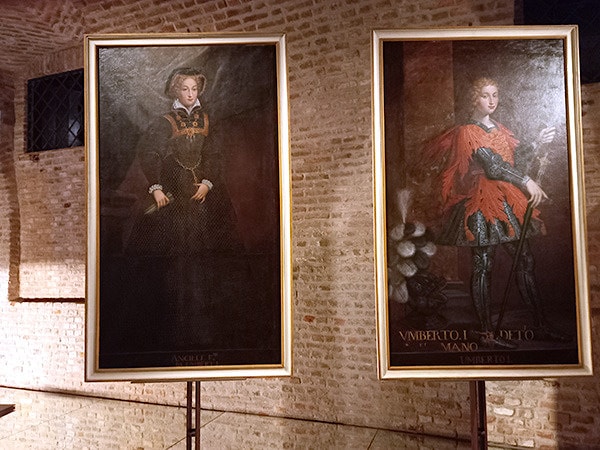
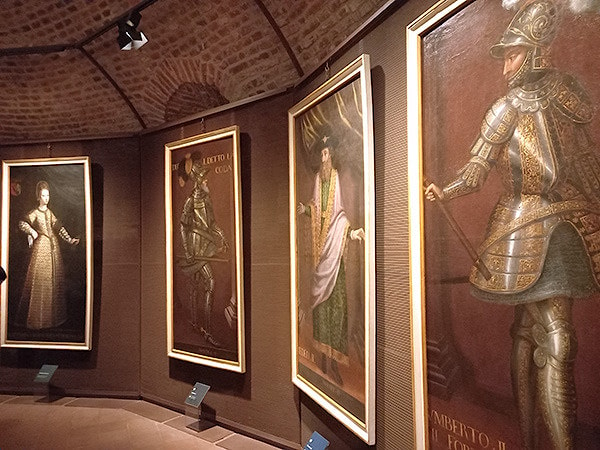
From the portrait gallery, the route leads through a succession of rooms, each accompanied by an explanation of its original purpose.
One room that stayed with us was a small ballroom. The palace notes explain that grand balls were actually quite rare, reserved for major occasions such as a coronation, a royal wedding or the birth of an heir.
Smaller balls, however, were held with reasonable regularity. Before cinema, television and streaming services came along, dancing was one of the few forms of entertainment available to the aristocracy — and apparently one of the more popular ones.
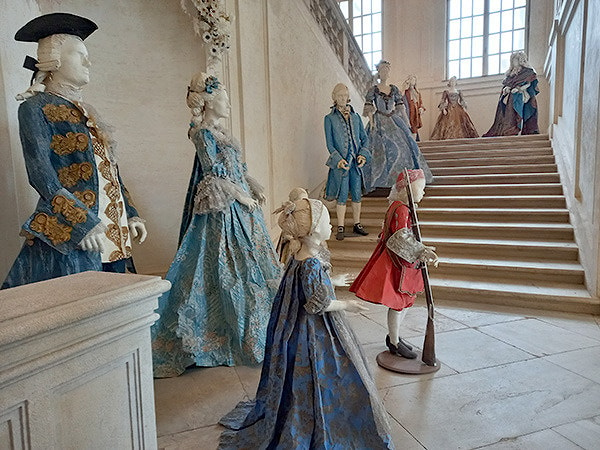
The household records contain a wonderfully revealing detail. On one particular occasion, the palace hosted the largest ball in its entire history.
The guest list numbered 25 people. Twenty-five!
At first, that sounds almost comically modest. But then you remember that a royal ballroom had to accommodate the musicians, 25 gentlemen and 25 young women forming the dancing couples — plus the watchful mothers keeping a close eye on their daughters as they danced with royal offspring.
Suddenly, 25 guests begins to feel like quite a crowd.
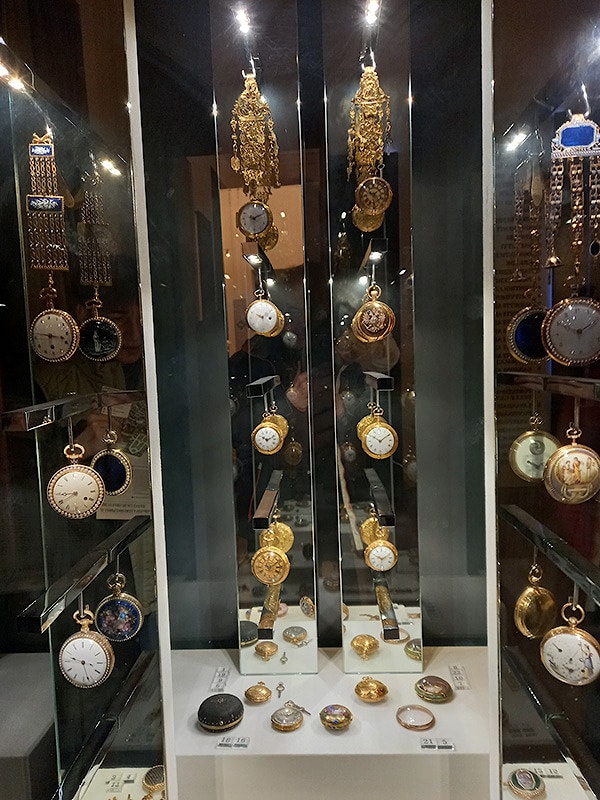
We spent five hours in the palace museum.
I honestly cannot remember another museum anywhere in the world where we have stayed that long. Partly, of course, this was because the palace contains an almost absurd number of rooms. But the rain outside deserves some of the credit too. Once we were safely inside, there was nowhere else we needed to be.
And then came the highlight.
The Gallery of Diana
The most spectacular space in the palace — and the one that appears on virtually every brochure and poster for Venaria Reale — is the Galleria di Diana, the Gallery of Diana, which links the towers on the left-hand side of the palace complex.
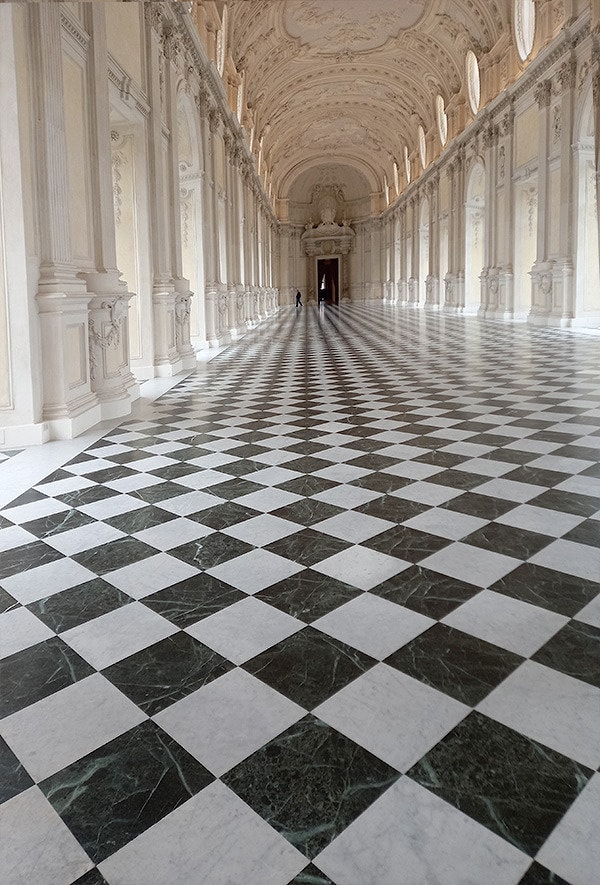
In the days of the Savoys, this was a place for the king and his heirs to stroll at leisure. The dimensions are almost theatrical: 80 metres long, 12 metres wide, with vaulted ceilings rising 15 metres above the floor.
And once again, we had the rain to thank.
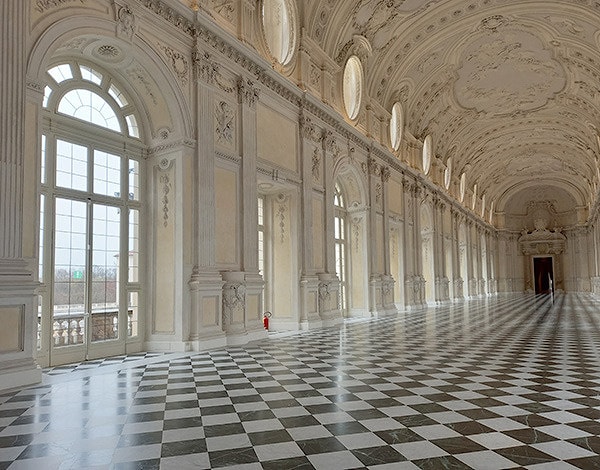
Because of the miserable weather, we were able to see the gallery in almost complete solitude — exactly as one might dream of encountering a royal palace. No crowds, no conversations, no footsteps echoing behind us. Just the vast geometry of the space unfolding into the distance in a mesmerising chequerboard perspective.
Even under the dark skies of that rainy day, 66 windows, large and small, flooded the gallery with light.
The effect was extraordinary. For a few minutes, it was almost impossible to remember that we were tourists in a museum. It felt as though the palace had emptied itself of the centuries between us and the Savoys — and was waiting, quietly, for its royal occupants to return.
Utterly, almost impossibly beautiful.
The Royal Galley and the Carriages
Of all the unusual treasures that have survived from the age of the Piedmontese kings, one of the most extraordinary is the Bucintoro — an 18th-century ceremonial Venetian galley.
It is said to be the only perfectly preserved ceremonial galley of its kind in the world, and its proportions are astonishing: 16 metres long, just 2.6 metres wide, with a mast rising 12 metres above the deck.
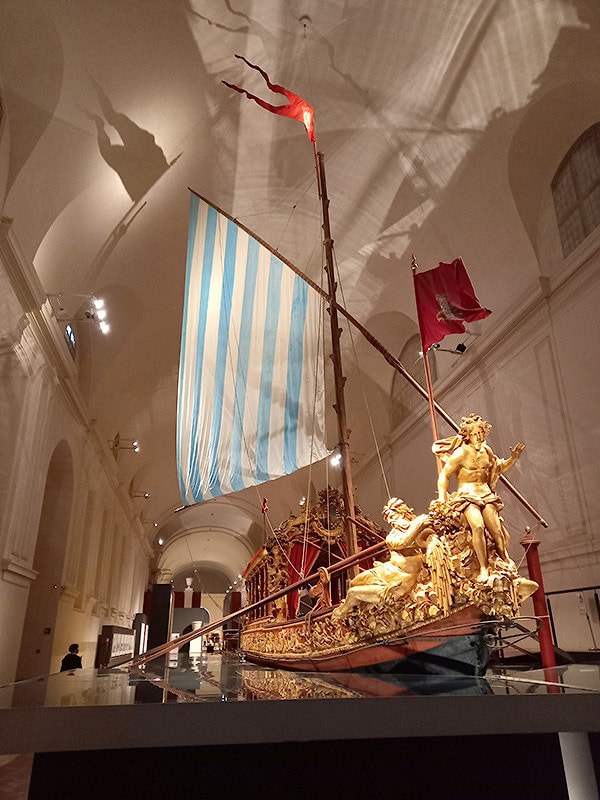
It is less a boat than a floating piece of theatre.
The royal vessel is lavishly decorated with gilded sculptures. At the centre stands Narcissus, surrounded by bearded figures representing the rivers of Italy. The steering wheel takes the form of a dragon, while along the sides are pairs of sea horses, daughters of the sea king, tritons and a whole underwater population of mythological creatures.
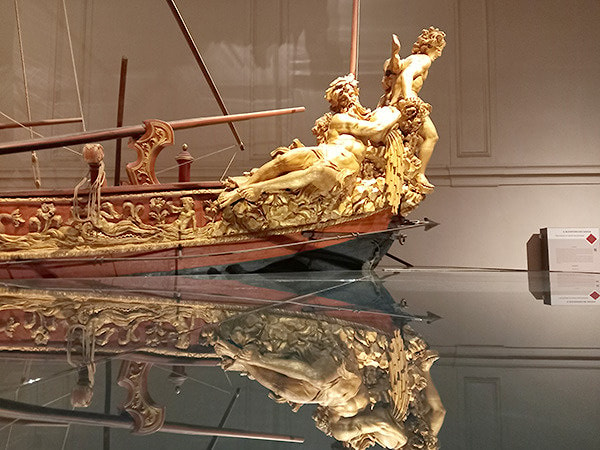
This was how the Savoy monarchs travelled in style down the River Po towards Rome.
The return journey was somewhat less glamorous.
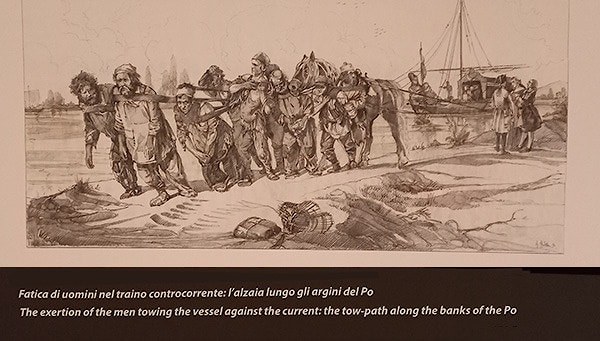
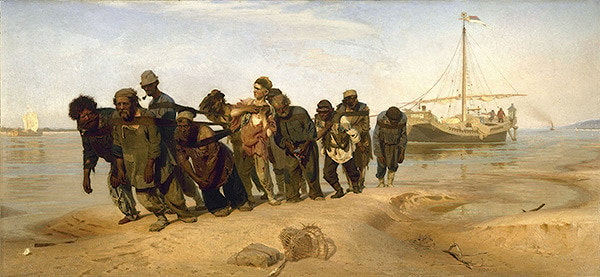
Against the current, the magnificent galley had to be hauled upstream by burlak labourers — men walking along the riverbank and pulling the vessel by ropes. The sight is uncannily reminiscent of Ilya Repin’s famous painting Barge Haulers on the Volga. Here, drawings displayed beside the galley explain to modern visitors how the system actually worked.
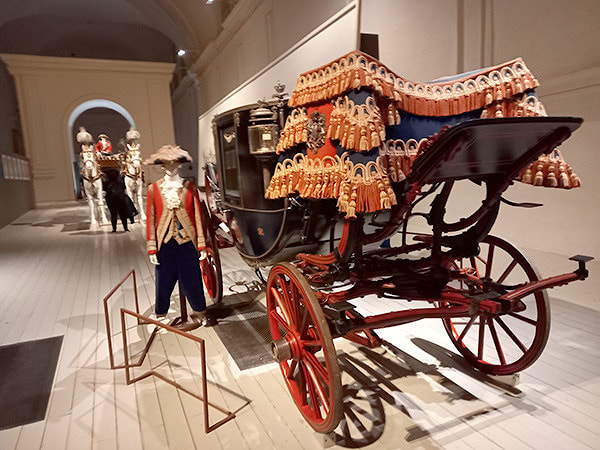
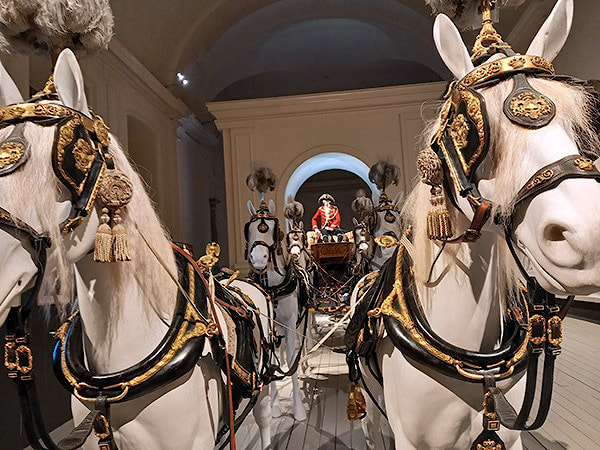
Not far away, an impressive collection of horse-drawn carriages is displayed, along with the extraordinary ornamental harnesses and decorations once fitted to the horses — represented here by a row of rather solemn equestrian mannequins.
The carriages themselves are remarkable. Essentially, they were houses on wheels, and standing beside them gives you a vivid sense of just how cumbersome travel could be before the age of the automobile.
A Museum That Knows How to Keep You There
The palace performs its role as a museum exceptionally well — and, importantly, in a thoroughly modern way.
The complex is enormous, and walking through it can be surprisingly demanding, so there are plenty of places to stop and rest: chairs, benches and comfortable seats positioned in front of paintings and multimedia screens showing scenes from court life.
The multimedia installations are particularly effective.
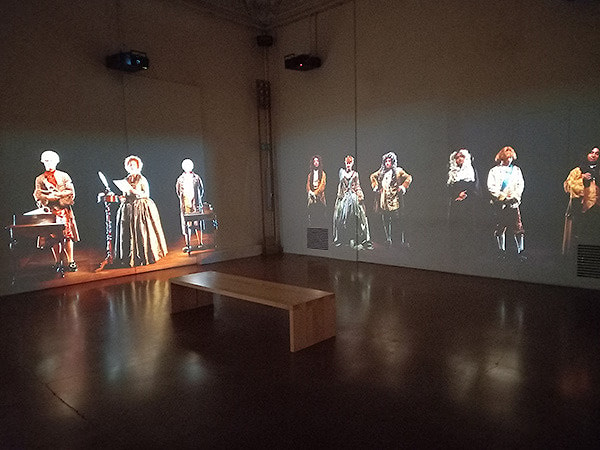
In some of the darker rooms, the walls themselves become a stage. As you enter a sequence of chambers, animated figures of courtiers suddenly appear on the walls. They talk to one another, wander from room to room and exchange little jokes and asides.
For a moment, the palace ceases to be a museum. You have the uncanny feeling that the people who once lived here have simply stepped out of the paintings and resumed their daily routines around you.
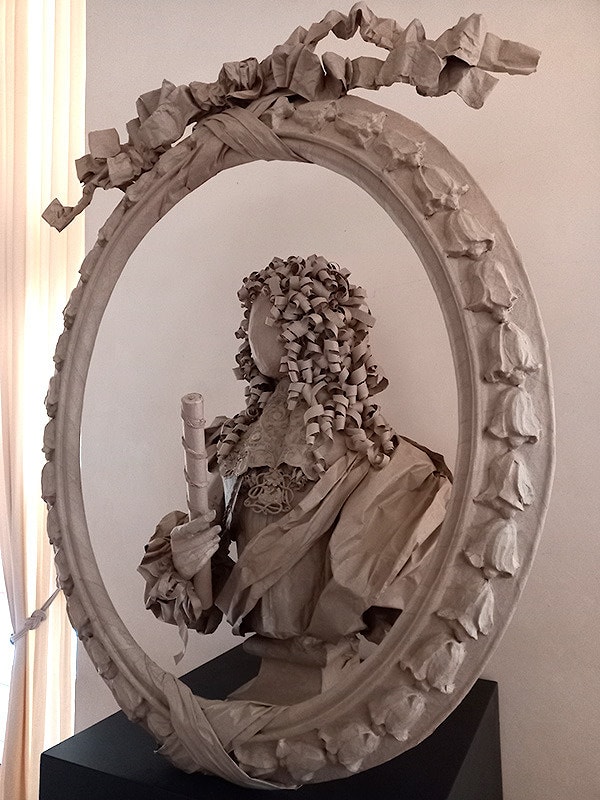
Above: a portrait of a monarch made using papier-mâché. The first time we had ever seen anything quite like it.
There is even a café inside the palace — a small but important detail that helped us survive our five-hour royal expedition in reasonable comfort and, more importantly, without starving.
Into the Gardens
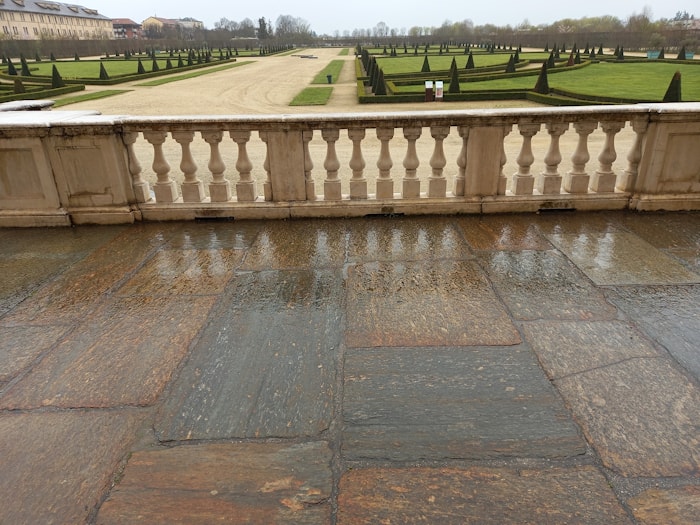
By the end of our fifth hour inside, the rain had finally stopped. We stepped outside — and into another world.
The gardens were waiting for us. It was at that moment that we finally understood the Japanese passion for cherry-blossom season.
The flowering trees at Venaria Reale were not merely beautiful. They were extravagant — almost intoxicating in their abundance. With every breath of wind, clouds of pink petals trembled among the branches, then broke loose and drifted through the air like confetti.
Slowly, almost imperceptibly, they settled across the lawns, the paths and the stone edges of the fountains, tinting the entire landscape with the palest shade of pink.
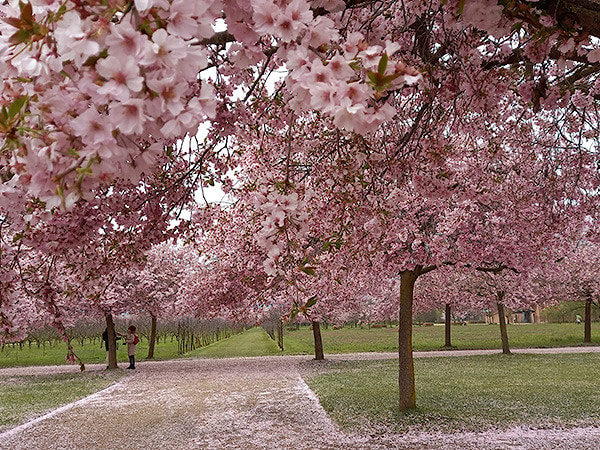
It was one of those rare travel moments when beauty is inseparable from the knowledge that it will not last.
We loved it so much that a couple of days later we returned to see the gardens again — this time under a blue sky.
And it was the second visit that allowed us to appreciate something we had missed in the rain: the extraordinary skill of the landscape designers.
The garden is vast and beautifully orchestrated, with long promenades leading into secluded corners, grottoes, arcades and sequences of arches inspired by ancient Rome. Fountains appear here and there, dedicated to gods whose names have long since slipped from everyday memory.
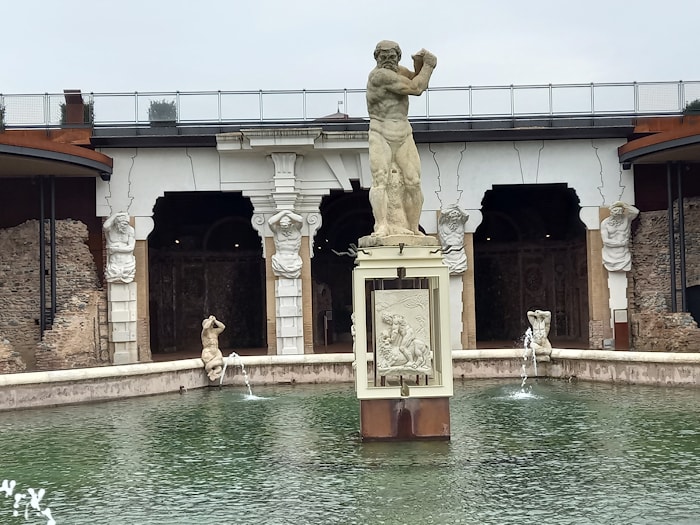
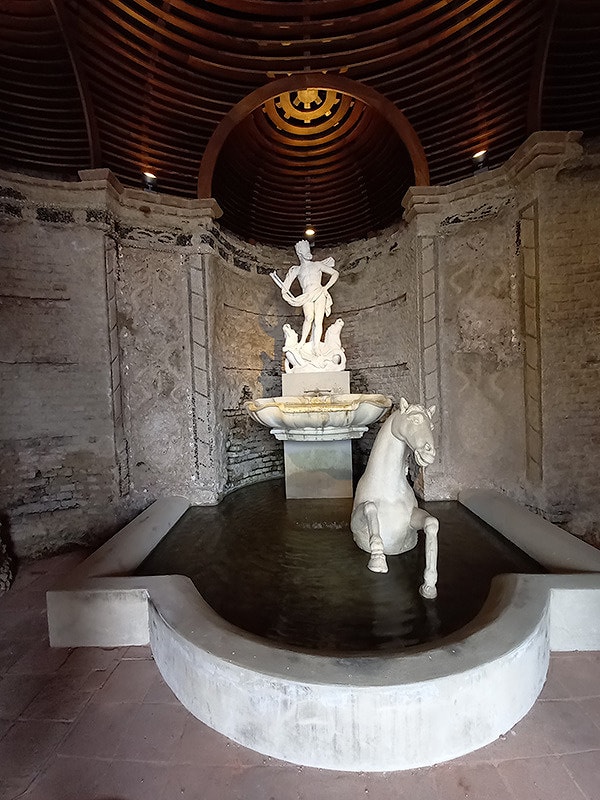
The deeper we walked, the more the garden revealed itself as a carefully constructed landscape rather than simply a collection of beautiful plants.
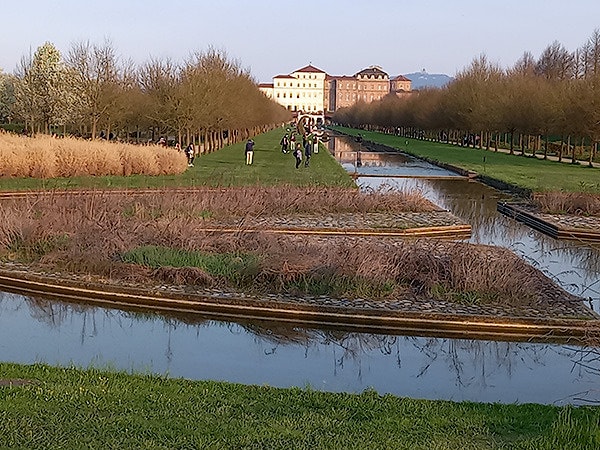
At the very far end lies an artificial lake. A pagoda once stood here, but this corner of the gardens has not yet been restored.
Perhaps that is not entirely a disadvantage. The lake has acquired a quieter, more natural character of its own, fringed with reeds and wonderfully peaceful. We found ourselves lingering there for no particular reason other than the simple pleasure of being beside it.
A Final Surprise
Eventually we made our way back towards the palace. Near the end of the visit, almost as we were leaving, the royal gardens gave way to something completely different: contemporary works of landscape art and installations carefully integrated into the historic surroundings.
To be honest, I am still not entirely sure what the artists intended to tell us. But watching enormous bronze replicas of trees standing among the real ones was certainly intriguing.
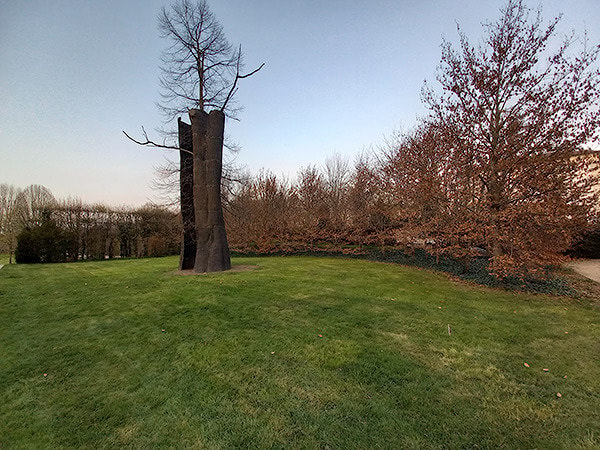
Above: a bronze replica of a very large tree.
And then, quite literally at the last possible moment, I received one final little gift from the spirit of the place.
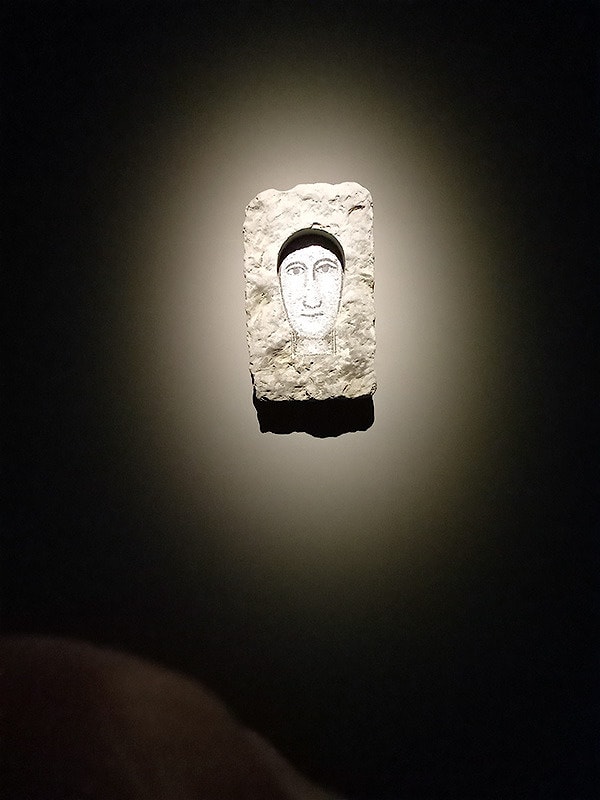
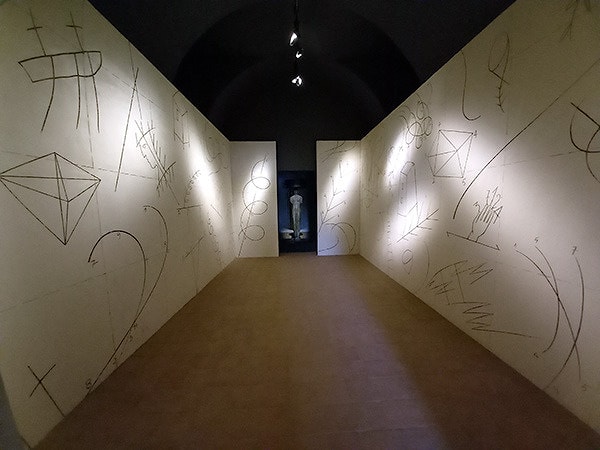
I noticed a half-open door set into the palace’s massive stone foundations. Nobody else was going in. Naturally, that was precisely why I had to look. The curiosity of a traveller — or perhaps the less respectable instincts of an explorer — got the better of me. I pushed the door open and found myself inside a very strange installation spread across three underground rooms. In the first, a small stone face was set directly into the wall.
The second room was the largest. Its walls were covered with remarkably neat, almost academic graffiti.
The third contained something resembling an ancient sculpture, locked inside a metal cage.
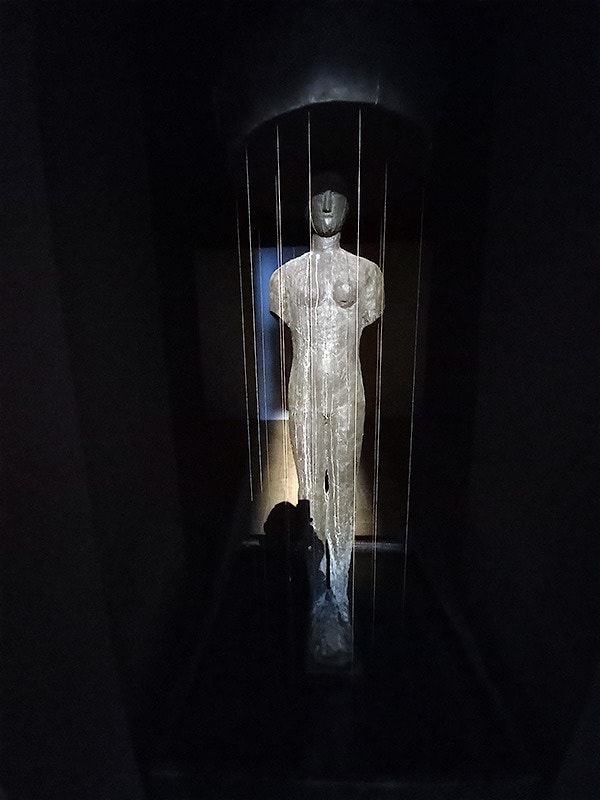
There was no sound. Nothing but the absolute silence of the underground chambers.
I stood there for a while, then stepped back outside and quietly pulled the door shut behind me. A group of tourists was passing by. Not one of them noticed me. Not one of them noticed the door.
For a strange instant, it was as though the door had never existed at all.
Perhaps, in Venaria Reale, it really hadn't.
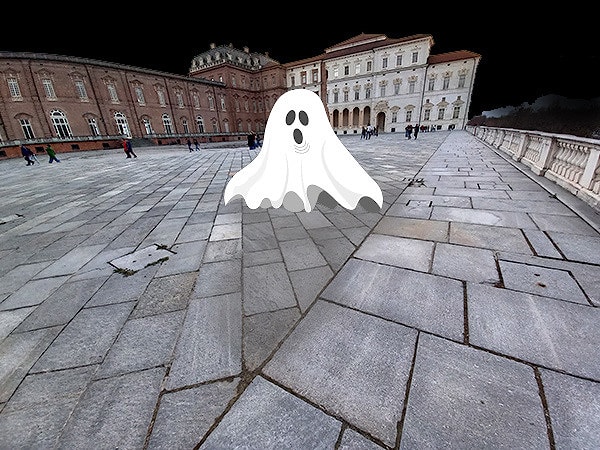
Ghost Stories and Rumours
Like any self-respecting old palace, Venaria Reale has accumulated its share of legends. For centuries, stories were whispered from one courtier to another, gathering a little more mystery with every retelling.
Whether any of them are true is, of course, beside the point.
In a place like this, the stories are part of the architecture.
- The Curse of the Hunt
The palace was conceived from the beginning as a kind of "Temple of the Hunt", so it is hardly surprising that hunting appears everywhere in its decoration: stucco work, bas-reliefs and frescoes crowded with animals, trophies, spears and antlers.
It makes for spectacular surroundings. But an old observation has acquired the status of legend: every Savoy duke who became too enthusiastic about hunting in Venaria Reale, bringing home an unusually impressive haul of trophies, soon suffered some personal misfortune or political setback.
According to the story, the spirits of the slaughtered animals took their revenge on anyone who treated hunting as entertainment rather than necessity.
Even Napoleon’s army was supposedly not immune. The Emperor once became rather too absorbed in a hunting expedition at Venaria Reale. Before long, his forces were to suffer catastrophic losses.
Perhaps the animals were simply keeping score.
- The Mirror of Diana
The palace’s magnificent main gallery, the Galleria di Diana, takes its name from the goddess of the hunt.
According to an old court legend, one of the mirrors in the gallery contains the reflected image of Diana herself. If you stare into it for long enough, you may see not your own reflection, but glimpses of your past — or even your future.
One young page, so the story goes, once accepted a wager to look into the mirror and summon the goddess.
He disappeared. Completely.
Yet afterwards, several people claimed to have seen him in the company of Diana herself.
Perhaps he simply found a better employer.
- The Lady in White
There are also stories of the Signora in Bianco, an elegant woman in a white dress who is said to appear in the Gallery of Diana at dawn or late in the evening.
There are two versions of her story.
According to one, she is the ghost of a court lady who fell in love with a Savoy duke. When their secret affair was discovered, she met a tragic end.
According to another, she was the lover of an army officer who was accidentally shot during a hunting expedition in the nearby forest.
Either way, she apparently still prefers the palace after dark.
- The Vanishing Staircase
Historians speak of a passage in the southern wing known as the Scalinata Fantasma — the Phantom Staircase — which, rather mysteriously, leads nowhere.
Legend has it that the staircase once served as a secret route by which the duke’s favourite women could reach his private chambers.
Then one of them mysteriously disappeared.
The staircase was sealed up.
And yet, on nights when the moon is full, people supposedly hear faint footsteps and the sound of quiet laughter coming from behind the wall.
Which is particularly unsettling when you remember that the staircase has been bricked up for a very long time.
A Saturday in Venaria Reale
Then came Saturday, bringing with it two unexpected pleasures. The first was the weekly farmers’ market.
The square filled with the bounty of Italian agriculture: fruit and vegetables of every conceivable size, shape and colour — including several specimens whose names we did not even recognise.
Venaria Reale lies at the foot of the Alps, and the local food culture naturally has a strong bovine accent. There are even macellerie — shops devoted to meat and other farm produce — alongside stalls selling the region’s famous cheeses and dairy products.
And, naturally, the farmers proved to be as friendly and generous as Italians seem to have a constitutional right to be. We were offered tastes of several Piedmontese cheeses, which made it rather difficult to remain merely spectators at the market.
Then we noticed the crowd. Everyone seemed to be wearing the same T-shirt.
The second Saturday surprise was beginning.
Venaria Reale was hosting a half-marathon.
It is difficult to imagine how many local people were prepared to spend their Saturday morning running 21 kilometres from the town centre towards the royal palace, around it, and then out into the countryside — towards the Prato Pascolo, the reserve of mountain pastureland at the foot of the Alps.
I tell the story of that remarkable landscape in another post.
The runners were wonderfully representative of the whole town: young and old, families, grey-haired veterans and even pregnant women — although, to be fair, the latter sensibly ran only as far as the palace. There were mothers with children, serious athletes and people who looked as though their usual weekend exercise consisted of walking to the nearest café.
Everyone wore the official race shirts and numbered bibs.
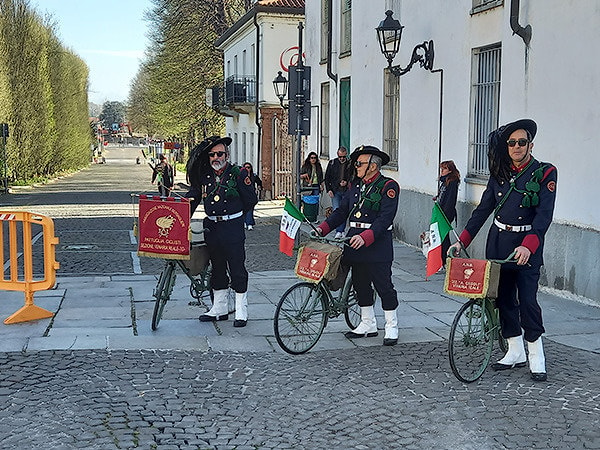
Above: the Carabinieri, looking as though they had stepped straight out of a children's edition of Pinocchio, added both ceremony and discipline to the half-marathon simply by being there.
And perhaps that is what stayed with us most about Venaria Reale.
It feels like a celebration that never quite ends.
One morning there are royal ghosts and Baroque halls; another, a palace full of schoolchildren and tourists. Then come the cherry blossoms, the farmers with their cheeses, a café full of gossip, runners streaming towards the Alps and a mysterious door that may or may not have existed.
Only after we returned home did we happen to read on a website that Venaria Reale is considered one of the four most beautiful villages in Piedmont.
And we could only nod.
Yes. Absolutely.
Venaria Reale really is.
***

Other posters on Italy



The site is powered by Nestorclub.com
Copyright © 2009-2026 Cats & Dreams. All rights reserved.